Why Professional Measurement & Installation Matter For Curtains
Curtains only look as good as their measurements and fixings. Professional measurement captures the exact track width, drop, fixing height and stack-back each window needs, and professional installation keeps the track level and secure so the fabric hangs evenly. For homeowners choosing
curtains on the Central Coast, getting both steps right separates a tailored finish from fabric that sits short, drags, gaps or sags.
Why Accurate Measurements Make or Break a Curtain Fit
Made-to-measure curtains are made for one window and one window only. The workroom cuts, hems and heads the fabric to the figures supplied, so a small error at the measuring stage carries through to the finished product. Unlike ready-made curtains, you can’t simply swap them for another size.
Accuracy matters most where curtains meet their boundaries: the floor, the ceiling and the walls either side of the window. A curtain that finishes a little too high looks like it has shrunk. One that runs too wide for its space crowds the corner or blocks a door. Precise measurements prevent these problems before anyone cuts any fabric.
Fullness depends on measurement too. The right amount of fabric across the track creates the soft, even folds that make curtains look tailored, and that amount varies with the heading style and fabric weight. An accurate track width gives the workroom the foundation it needs to get fullness right.
How to Measure Curtains: What the Process Involves
Measuring for curtains involves more than the width and height of the glass. A thorough measure captures these key elements:
- Track or rod width. This covers the full length of the track, including any extension past the window frame. The extension matters because it determines where the curtains sit when open.
- Fixing height and method. A face fix mounts the track to the wall above the window, while a ceiling fix mounts it to the ceiling itself. The fixing point sets where the curtain starts, so you need to decide on it before measuring the drop.
- Curtain drop. You measure the drop from the fixing point down to where you want the curtain to finish. Taking it at several points across the window reveals whether the floor or ceiling runs out of level.
- Stack-back space. Stack-back is the space the curtains occupy when fully open. Planning for it lets the fabric clear the glass, so you keep your view and natural light.
- Hem finish. Curtains can finish just above the floor, kiss the floor at full length, or puddle onto it for a relaxed, luxurious look. Each finish changes the final drop figure. For more on how length affects your room, read
The Role of Curtain Length in Privacy & Light Control.
Where DIY Measuring Gets Complicated
On paper, the process looks straightforward. In real homes, few windows are perfectly square. Walls lean slightly, floors dip or rise across a room, and older homes often settle unevenly over time. A single drop measurement taken at one end can leave the other end short or dragging.
Cornices add another layer of complexity, since they affect where a ceiling-fixed track can sit and how the curtain meets the ceiling line. Wide spans bring their own challenges, including joins in the track, extra support points and the weight of a large expanse of fabric. These situations call for experience, not just a tape measure.
Common Measuring and Installation Mistakes to Avoid
Most curtain problems trace back to a handful of avoidable errors. Watch for these outcomes:
- Curtains that sit too short or drag. A drop measured from the wrong point, or measured once on an uneven floor, leaves a hem that hovers awkwardly or bunches along the ground.
- Gaps that let light in. Tracks that stop flush with the frame, or curtains without enough width, leave light leaking around the edges. This undermines privacy and room darkening.
- Uneven hems. When a track runs out of level, the hemline follows it, even if the fabric itself is cut perfectly straight.
- Sagging tracks. Too few brackets, or fixings that miss solid backing, let the track bow under the fabric’s weight over time.
- Poor stacking that blocks the view. Without planned stack-back space, open curtains still cover part of the glass and cut into your outlook.
- Wasted fabric on made-to-measure orders. Because custom fabric is cut to size, a measuring error can mean remaking the curtains entirely.
Example: Picture a homeowner who measures a living room window once, from the centre of the frame to the floor. The floor slopes slightly towards the sliding door, so the finished curtains brush the floor at one end and sit visibly short at the other. Measuring the drop at several points would have revealed the slope before the fabric order went in.
How Professional Installation Shapes the Finished Look
Precision installation turns well-made curtains into a polished finish. A professional installer checks the fixing line with a level rather than relying on the window frame or ceiling, which may not run true themselves. The result is a track that sits straight and a hemline that stays even.
Secure fixing matters just as much. Installers locate solid fixing points, space brackets to carry the fabric’s weight, and match fixings to the wall or ceiling material. This keeps the track firm through years of daily opening and closing.
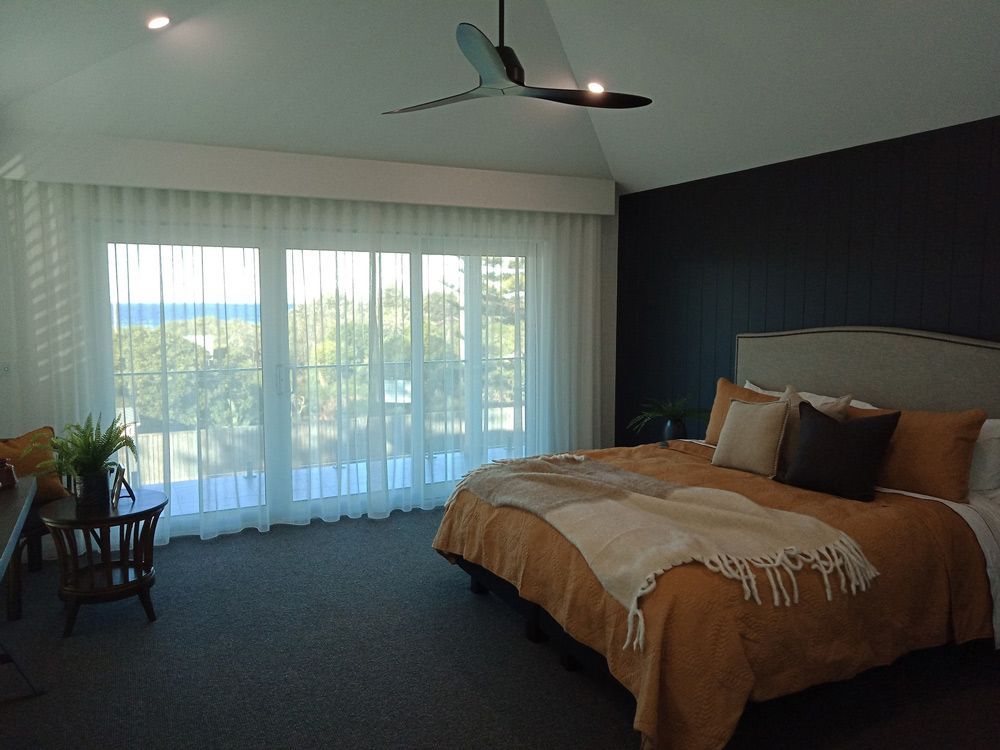
Even drape depends on these details. Wave-style headings show this clearly, because the spacing of the carriers and tape creates the undulations in S-wave curtains. If the track runs out of level or the carriers sit unevenly, the waves lose their rhythm. Careful installation keeps fullness consistent across the whole width.
Finally, a professional considers the room’s style. The fixing height, track position and hem finish all influence whether curtains feel elegant, relaxed or contemporary, and an experienced installer helps you land the look you want.
Getting Track and Fixing Placement Right for Each Window
Every window needs its own placement decisions. The installer weighs how high to mount the track, how far to extend it past the frame, and whether a face fix or ceiling fix suits the opening. Mounting higher can make a ceiling feel taller, while extending wider lets the curtains stack clear of the glass.
Obstacles shape these decisions too. Architraves, cornices, air-conditioning units, light switches and nearby doors can all limit where a track can go. A professional assesses each one on site and adjusts the placement so the curtains operate smoothly without fouling anything.
Consistency across a room matters as well. When several windows sit side by side, aligning the tracks at a shared height creates a cohesive look, even if the windows themselves differ slightly in size or position. This kind of judgement comes from seeing the whole room, not just measuring a single opening.
What to Expect From an In-Home Measure and Quote
Ron Ayton Curtains, Blinds & Shutters makes the process simple. The team offers free measure and quotes onsite, with no obligation, so you can explore your options in your own space.
Ron Ayton brings a mobile showroom to your home, showing curtains, tracking and decorative rods. Seeing fabrics and hardware against your own walls, floors and natural light makes choosing far easier than picturing them in a store.
Every set of custom made curtains is designed in consultation with you, and an interior design team is on hand to help with fabric, colour and style decisions. The result is a curtain designed, measured and fitted for your specific windows.
Your next step: If you’re planning new curtains on the Central Coast, book a free in-home measure and quote before you pick up a tape measure. Call Ron Ayton Curtains, Blinds & Shutters on 02 4332 5388 to arrange a visit.
Frequently Asked Questions
How do you measure for curtains?
Measuring for curtains involves recording the track or rod width, the fixing height, the drop from the fixing point to the desired hem, and the stack-back space needed when the curtains are open. You also need to decide on the hem finish, such as above the floor, floor length or puddled. Measuring the drop at several points helps account for uneven floors or ceilings.
What is curtain stack-back?
Stack-back is the space curtains take up when fully open. Planning for it lets the fabric clear the window, so open curtains don’t block your view or natural light.
Should curtain tracks be face fixed or ceiling fixed?
Both work well; the right choice depends on the window, the ceiling height and the look you want. A face fix mounts the track to the wall above the window, while a ceiling fix mounts it to the ceiling. Cornices, architraves and nearby obstacles can also influence which method suits each window.
Why do my curtains look uneven at the bottom?
Uneven hems usually come from a track that runs out of level or a floor that slopes across the room. A drop measured at only one point won’t reveal these variations. Professional installation levels the track independently of the frame or ceiling to keep the hemline even.
Is it worth paying for professional curtain installation?
For made-to-measure curtains, professional installation protects your investment. An installer levels and secures the track, plans the stack-back and keeps the drape even across the full width. It also reduces the risk of measuring errors that could mean remaking custom fabric.