Window Shutters: Pros, Cons & Which Type Is Best For Your Home
If you're weighing up window shutters for your home, you've probably found plenty of glowing product pages and not much honest comparison. Shutters genuinely are a great investment for a lot of homes — but like any window covering, they suit some situations better than others. Here's a straightforward look at the real window shutters pros and cons, plus how the main types compare, so you can work out which shutters are the best fit for your specific home.
The Real Advantages of Window Shutters
- Light and temperature control. Shutters are all about light and shade — the louvred panel design lets you adjust exactly how much light and airflow comes into a room, rather than a simple open-or-closed option. This adjustability also supports genuinely useful temperature control, helping keep rooms cooler in summer and warmer in winter.
- Privacy on your terms. Because shutter louvres can be partially or fully opened, you get flexible control over privacy throughout the day, rather than a single fixed setting.
- Durability and longevity. Quality shutters, particularly external aluminium options, are built to last, with minimal upkeep required compared to fabric window coverings that fade, tear or need regular cleaning.
- A genuine style upgrade. Shutters bring an air of elegance and timeless style that enhances a home's look both inside and out, suiting a wide range of architectural styles rather than just one aesthetic.
- Noise reduction. For homes near busy roads or beachfront areas with plenty of activity noise, shutters can add a meaningful layer of sound control alongside their other benefits.
The Honest Drawbacks to Consider
Shutters aren't the right fit for every situation, and it's worth going in with realistic expectations.
- Higher upfront cost. Quality, custom-made shutters typically cost more upfront than standard blinds or curtains, since they're a more substantial, built-to-last product rather than an off-the-shelf item.
- Fixed installation. Unlike curtains or blinds, shutters are fixed window coverings, so once installed, they're a more permanent design commitment — not something you'll casually swap out for a seasonal refresh.
- Material-specific limitations. Not every shutter material suits every location. Timber, for instance, isn't the best choice for genuinely wet or humid areas, which is exactly why material choice matters as much as the decision to go with shutters at all.
- Professional installation matters. Getting the fit right — especially for non-standard or arched windows — really benefits from custom measurement and professional installation, rather than a generic, ill-fitting DIY approach.
Plantation Shutters: Pros, Cons and Best Fit
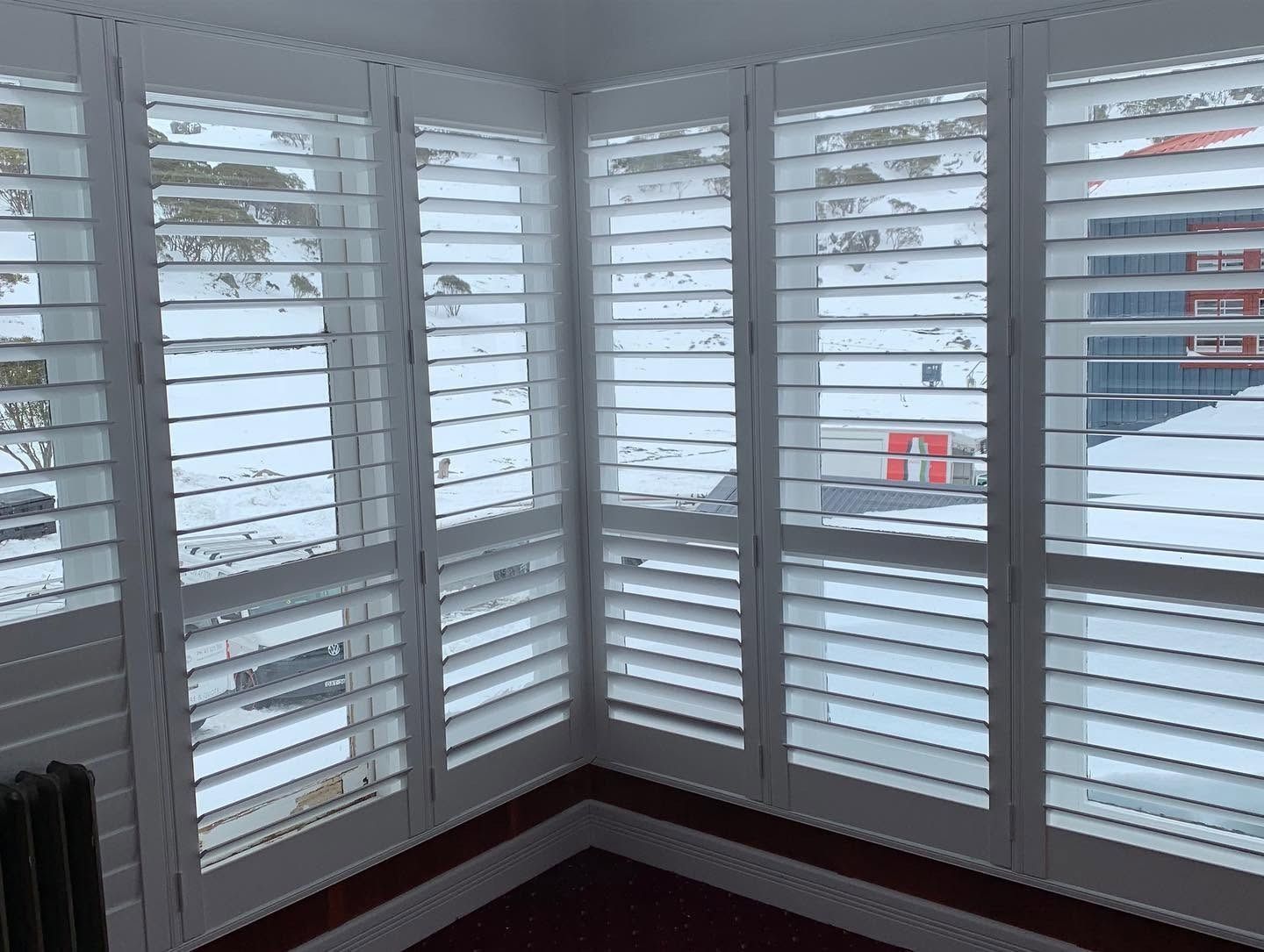
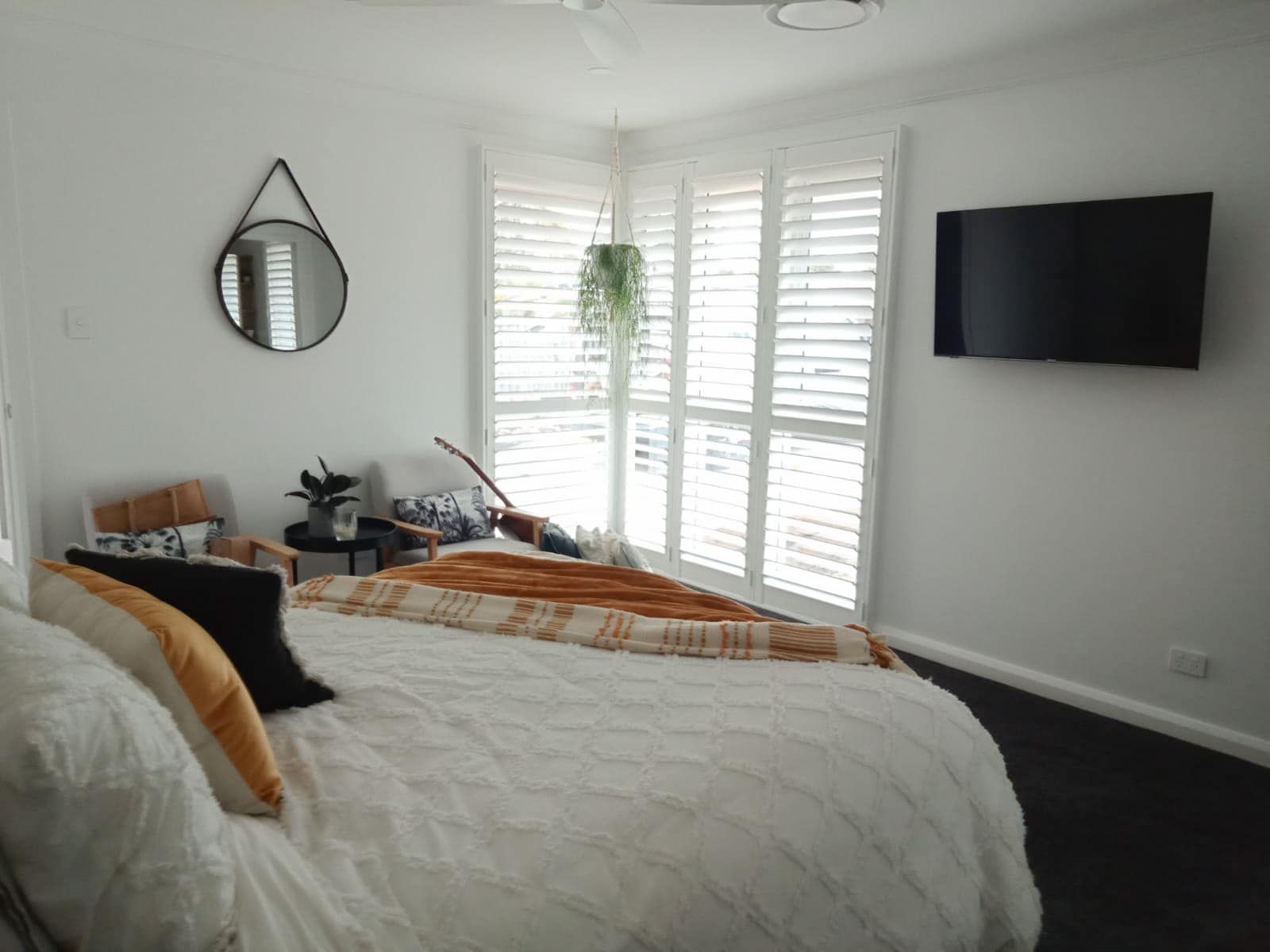
Plantation shutters are one of the most popular choices for Central Coast homes, and it's easy to see why. With their structured hinge system and louvred panels, they offer excellent temperature control, ventilation, and that classic, elegant look that suits both modern and heritage-style homes.
The main consideration is choosing the right material for the specific room. Timber plantation shutters bring timeless charm and excellent insulation properties, making them ideal for living areas and bedrooms. For moisture-prone spaces — bathrooms, kitchens, laundries — PVC plantation shutters are the better fit, combining durability with elegance in high-humidity conditions without the risk of warping that timber can face in these environments.
Best fit: Living areas and bedrooms for timber; bathrooms, kitchens and other wet areas for PVC. If you'd like to explore the full range, our
plantation shutters Central Coast page covers styles, custom sizing and the made-to-measure process in more detail.
PVC Shutters: Pros, Cons and Best Fi
PVC plantation shutters are purpose-built for durability in tough conditions, particularly moisture and, on the Central Coast specifically, salt air. They resist warping, swelling and corrosion in a way timber simply can't match in genuinely humid or coastal-exposed spaces, while still delivering the classic plantation shutter look.
The trade-off is largely aesthetic — while PVC has come a long way in style and finish, some homeowners still prefer the natural warmth and grain of timber for main living spaces where moisture isn't a concern. This is really a case of matching material to location rather than PVC being a lesser option overall.
Best fit: Bathrooms, kitchens, laundries, and any room with regular moisture exposure — genuinely one of the best type of plantation shutters for these specific spaces.
Aluminium Shutters: Pros, Cons and Best Fit
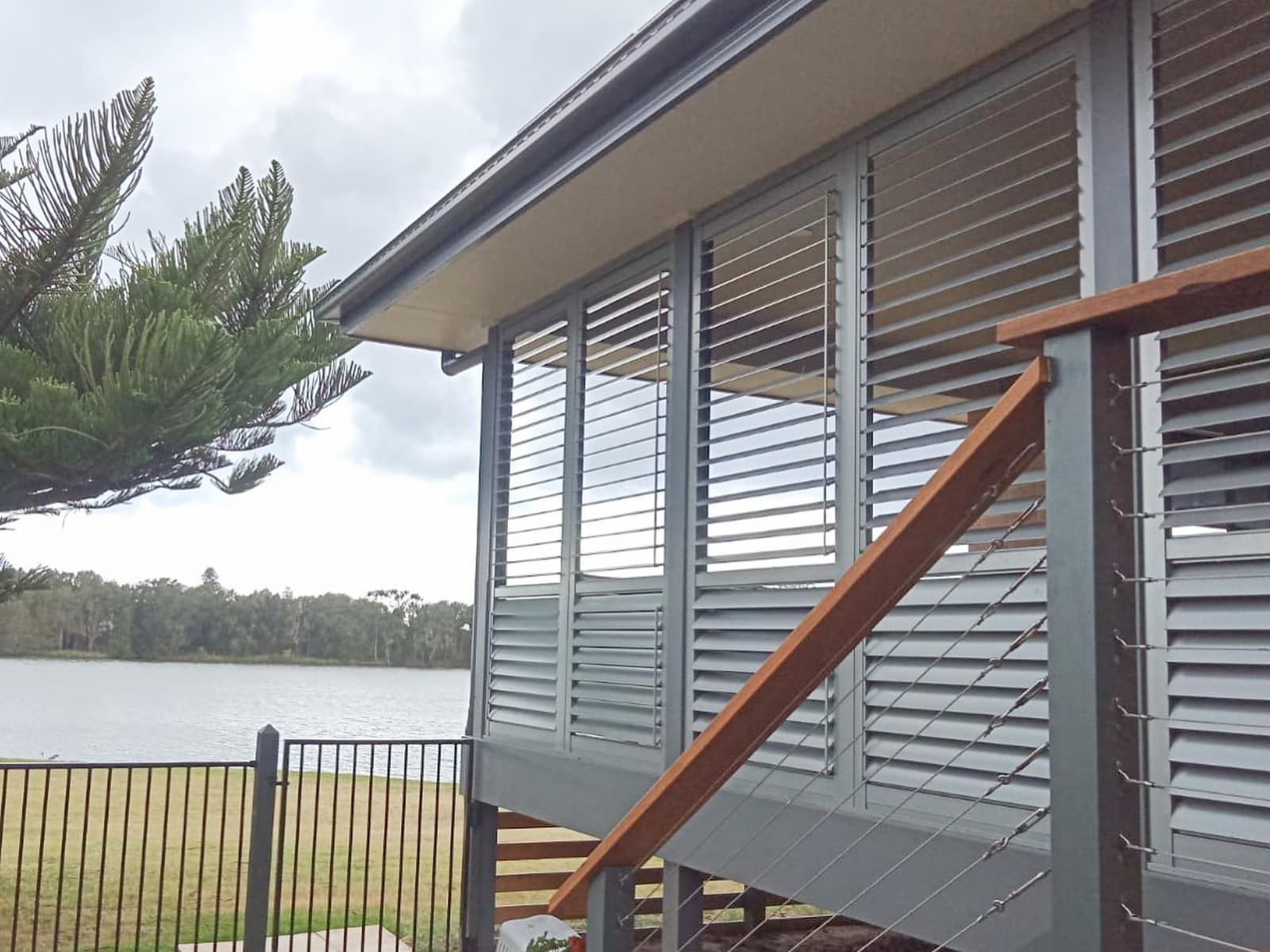
Aluminium shutters are the standout choice for external and outdoor applications. Built to withstand the unpredictable Australian climate, they're a robust, low-maintenance option for patios, balconies and exposed windows, resisting moisture and salt corrosion while still offering excellent airflow and privacy control — a genuinely important factor for coastal Central Coast properties.
Beyond weather resistance, external aluminium shutters add a real layer of privacy and security to a property, alongside their outdoor durability. Maintenance is minimal — they're easy to clean and don't demand the ongoing upkeep some other outdoor materials require.
The main consideration is application: aluminium is specifically recommended for outdoor and exterior use rather than internal living spaces, where timber or PVC plantation shutters are generally the better aesthetic and functional fit.
Best fit: Patios, balconies, and exterior windows facing coastal or exposed conditions. Explore the full range on our
external aluminium shutters page.
Which Type of Shutter Is Best for Your Home?
There's no single "best" shutter — the right choice depends entirely on where it's going and what you need it to do. As a general guide:
- Living rooms and bedrooms: Timber plantation shutters for warmth, style and insulation
- Bathrooms, kitchens and laundries: PVC plantation shutters for moisture resistance without compromising on look
- Patios, balconies and exterior windows: Aluminium shutters for weather resistance, privacy and security
Are plantation shutters worth it? For most Central Coast homes, yes — provided the material is matched properly to the room and its conditions. Getting that pairing right is exactly where a proper measure and quote makes the difference between shutters that perform beautifully for years and ones that don't quite suit the space they're in.
If you're ready to explore your options, our full range of
shutters on the Central Coast covers timber, PVC and aluminium options, and our mobile showroom can bring a genuine selection to your home so you can see exactly how each material and finish looks in your own space before you commit.
FAQs
Are plantation shutters worth the investment compared to blinds or curtains?
For most homes, yes, particularly given their durability, insulation benefits and timeless look. The higher upfront cost is generally offset by a longer lifespan and less ongoing maintenance compared to fabric window coverings.
Can I use timber shutters in a bathroom?
It's not generally recommended, since timber can warp or swell in consistently humid conditions. PVC plantation shutters are a better-suited alternative for bathrooms and other wet areas.
Are aluminium shutters only suitable for outdoor use?
Aluminium shutters are specifically recommended for exterior applications like patios and balconies, where their weather resistance and durability are put to best use, rather than internal living spaces.
Do shutters help with noise reduction?
Yes, particularly for homes near busy roads or beachfront areas. Shutters can add a meaningful layer of sound control alongside their light and temperature control benefits.
Do shutters need to be custom-made for every window?
For the best fit, particularly on non-standard, arched or unusually sized windows, custom measurement is strongly recommended over off-the-shelf options, ensuring proper function and a polished finished look.